


1st INTERNATIONAL SUMMIT ON
Sufficiency.
Co-organised by University of South Australia and Sciences Po
The conference will be hybrid
Date: May 4th, 2023
Time: 16.30-19.30 (University of South Australia, Council Room)
9:00 to 12:00 (Sciences Po Paris, Simone Veil Amphitheatre)
Address any queries to: Adjunct Prof David Ness, UniSA STEM david.ness@unisa.edu.au


WELCOME TO THE
1st International Summit on Sufficiency
On behalf of the Organizing Committee, we are delighted to invite you to participate in the 1st International Summit on Sufficiency (ISS 2023), to be hosted in Adelaide, Australia, with a flexible hybrid operating. The Summit is scheduled as 16.30-19.30 (Adelaide, UTC + 09:30), May 4th, 2023. ISS 2023 will provide an effective platform for professionals, scientists, engineers, educators, students, and researchers worldwide to share and exchange their scientific ideas, views, innovations and experiences in the various areas of urban decarbonisation and low-carbon economies by improve the energy and resource sufficiency. The Summit features a dynamic program incorporating a range of academic, technical, and industrial related keynote speakers, and discussions. We warmly invite you or anyone interested in the area, to take part in this unique Summit to build up a network to mainstream the concept and grasp the emissions reduction potential needed to decarbonise our economies.
The climate crisis is escalating as greenhouse gas (GHG) emissions keep increasing. Climate impacts are now a daily reality of millions of citizens in several countries. The techno-optimism approach of climate policies around efficiency and the decarbonisation of energy supply failed in reducing GHG emissions. But there are some developments that may give us hope such as sufficiency policies. The 2022 IPCC report on climate mitigation defines sufficiency as a set of policy measures and daily practices that avoid the demand for energy, materials, land, water, and other natural resources while providing wellbeing for all within the planetary boundaries. By 2050, sufficiency has the potential to reduce emissions, compared to current policy scenarios, by more than 50% in almost each end-use sector. Yet, sufficiency policies are overlooked in climate policies and scenarios aiming at a 1.5°C temperature target by the end of the century. As of today, Thailand and France are the only two countries in the world to consider sufficiency. The former introduced to policy-making the Sufficiency Philosophy Economy in the nineties while the latter considers since 2015 energy sufficiency as one pillar to decarbonise the French economy.
This first sufficiency Summit is a follow-up to the introduction of the concept in the IPCC report. The aim is to make the concept known to a broader audience and to build a network of policy-makers, practitioners and scientists to mainstream the concept and grasp the emissions reduction potential needed to decarbonise our economies.

Speakers, Moderators
and Panel Members

Director of ECSDCTS
Sciences Po
Paris, France
https://www.sciencespo.fr/liepp/en/users/marcringel.html

Dean of PSIA
Sciences Po
Paris, France
https://www.sciencespo.fr/psia/content/arancha-gonzalez-laya.html

Dean, External Engagement & Executive Director Jean Monnet
Centre of Excellence & Network, University of South Australia
https://people.unisa.edu.au/Anthony.Elliott

Lecturer and Researcher at Sciences Po (Paris)
Senior fellow at OpenExp
https://www.linkedin.com/in/yamina-saheb-9b805a6/

UniSA STEM
University of South Australia
https://people.unisa.edu.au/david.ness

Head of the climate department
City of Paris, France
https://www.linkedin.com/in/yann-fran%C3%A7oise-27605039/


Former director Transport Planning, Government of Punjab, and Centre of Urban Research
RMIT University
https://www.linkedin.com/in/sadaf-s-849a00193/

Founding Director at Shanghai Minhang Jiangchuan Lvse Guangnian (Green Light-Year) Environmental Service Centre
https://www.linkedin.com/in/helenni/


Global Climate Action
https://www.linkedin.com/in/lindita-xhaferi-salihu-181376b/
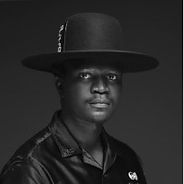

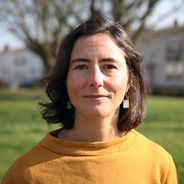


Sustainable Food Economies Research Group (SFERE)
Leuven University
https://www.kuleuven.be/wieiswie/nl/person/00058207
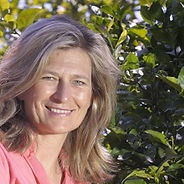
CoE in Food Security
University of Pretoria (UP)
https://www.up.ac.za/research-matters/news/researchers/view-2997097-professor-lise-korsten


Deputy Premier of South Australia
https://www.premier.sa.gov.au/the-team/susan-close-mp


Former Irish Minister of State for Sustainable Transport and Planning
https://www.europarl.europa.eu/meps/en/197654/CIARAN_CUFFE/cv#detailedcardmep

Summit Topics

SUFFICIENCY in
urban and human settlements
Efforts to reduce the emissions of urban settlements, responsible for around 70% of the global total, have largely overlooked the high potential of policies that constrain the growth of material stocks and consumption carbon. The challenge is to ensure societal wellbeing, equitable access to services and dramatic cuts in emissions via leaner and resource-saving built form, planning configurations and more interconnected, cost effective and less carbon-intensive infrastructure solutions. Examples of such policies and best practice solutions will be examined, while highlighting their potential to transform approaches in the global North and South and dramatically reduce carbon, resources and cost.

SUFFICIENCY and clothes
Material throughput of the global fashion system has doubled since 2000 and in 2019,
consumption of clothes and textiles has been recognised as the fourth most polluting lifestyle domain in Europe, after energy use, mobility, and food. Limiting fashion production and consumption in terms of total volumes and redistributing benefits and burdens in a more equitable manner are the critical steps to ensure that the global fashion system stays within the planetary boundaries, while meeting the basic needs of the population for clothing.

SUFFICIENCY for Nutrition
Global food production threatens climate stability and ecosystem resilience and constitutes the single largest driver of environmental degradation and transgression of planetary boundaries. At the same time an unhealthy diet poses a greater risk to morbidity and mortality while 820 million people still lack food and many more consume either low-quality diets or too much food. A radical transformation of the global food system is needed to avoid failing to meet the UN Sustainable Development Goals (SDGs) and the Paris Agreement, and to ensure today’s children will not inherit a planet that has been severely degraded and where much of the population will increasingly suffer from malnutrition and preventable disease.

Schedule
16:30-16:40 (9:00 - 9:10 CET)
-
Moderator: Prof. Dr. Marc Ringel
-
Welcome: Ms. Arancha GONZALEZ LAYA; Prof. Anthony Elliot
16:40-16:50 (9:10 - 9:20 CET)
Keynote: Sufficiency in IPCC 2022 report on climate change mitigation
-
by Dr. Yamina Saheb
16:50-17:25 (9:20 - 9:55 CET)
Session I: Round table discussion on Sufficiency in Urban and Human Settlements
-
Moderator: Adjunct Prof. David Ness
-
Keynote: Mr. Yann Francoise
Panellists:
● Prof. Daniel A. Barber
Professor of Architecture, University of Technology, Sydney, and Guggenheim Fellow
● Dr. Sadaf Saeed
Former Director Planning, Transport Department, Government of Punjab (Pakistan), and Centre of Urban Research, RMIT
● Ms. Helen Huan Ni
Founder, Green Light-Year Environmental NGO, Shanghai, PR China
● Dr. Jane Lomax-Smith AM
Lord Mayor of Adelaide, South Australia, Australia
17:25-17:55 (9:55 - 10:25 CET)
Session II: Round table discussion on Sufficiency and Clothes
-
Moderator: Dr. Katia Vladimirova
-
Keynote: Ms. Lindita Xhaferi-Salihu
Panellists:
● Dr. Irene Maldini
OsloMet University (Norway)
● Mr. Yayra Agbofah
Revival Earth (Ghana)
● Dr. Samira Iran
Technische Universität Berlin
Co-Organisers


Supporter
.png)

WRF 2023 has a Sufficiency track
17:55-18:25 (10:25 - 10:55 CET)
Session III: Round table discussion on Sufficiency for Nutrition
-
Moderator: Dr. Yamina Saheb
-
Keynote: Prof. Olivier De Schutter
Panellists:
● Ms. Tessa Avermaete
Program Director at Global Alliance for the future of food
● Mr. Peter Elwin
Director of Fixed Income & Head of Food & Land Use program at Planet Tracker
● Prof. Lise Korsten
Co-director of the Department of Science and Innovation-National Research Foundation
● Ms. Lila Djellali
Deputy Major of Paris 20th
18:25-18:30 (10:55 - 11:00 CET)
Coffee break
18:30-19:30 (11:00 - 12:00 CET)
High level policy discussion on Embedding sufficiency in climate policies
-
Moderator: Ms. Arancha GONZALEZ LAYA
Panellists:
● Hon Dr Susan CloseDeputy Premier & Minister for Climate Change, Government of South Australia
● Ms. Costa, Ines dos Santos
Advisor at Deloitte Sustainability & Climate at Risk Advisory
● Mr. Ciaran Cuffe
Former Irish Minister of State for Sustainable Transport and Planning
References
and Resources
Useful Links
-
Negawatt: https://negawatt.org/energy-sufficiency
-
ADEME (French Agency for Ecological Transition) Scenarios: https://transitions2050.ademe.fr/en
-
World Resources Forum/UniSA Webinar 2022 https://www.linkedin.com/posts/world-resources-forum_insights-from-our-sufficiency-webinar-activity-7006927449158467584-ERcB?utm_source=share&utm_medium=member_desktop
-
FULFILL https://fulfill-sufficiency.eu/
-
Beyond Growth 2023 https://www.beyond-growth-2023.eu/
-
WRF 2023: Sufficiency https://wrf2023.org/science/
Research/Journal papers
-
Saheb, Y. 2021. COP26: Sufficiency Should be First, Buildings & Cities
-
Haberl, H. et al. 2022. Settlement and Infrastructure patterns influence energy use and CO2 emissions almost as much as economic activity, Research Square
-
Virag, D. et al. 2022. How much infrastructure is required to support decent mobility for all? An exploratory assessment, Ecological Economics
-
Ness, D. 2022. Towards Sufficiency and Solidarity: COP27 implications for construction and property, Buildings & Cities
-
Ness, D. and Xing, Ke. 2017. Toward a resource efficient built environment: a literature review and conceptual model, Journal of Industrial Ecology
-
Huang, B. et al 2022. Rethinking carbon–neutral built environment: Urban dynamics and scenario analysis, Energy and Buildings